RULE OF THREE: 3 min without air • 3 hr without shelter • 3 days without water • 3 weeks without food
Plan for the worst, add redundancy, and hope the skills are never needed.
Cell Towers, Grid Electricity, Water, and logistics over a large area may not function.
No food, no water, no shelter. There are solutions. Ancestors happened to cope.
Redundant Power and redundant comm systems are available at low cost.
Amateur radio, GMRS, and Mesh can serve as a tri-redundant system.
Helpful Guides: Checklist materials, Water & Shelter
https://w3ft.com/wp-content/uploads/2025/10/2PersonPrepSheet_72-hr_30Days.xlsx
https://w3ft.com/wp-content/uploads/2025/10/Survival_Shelter_Guide_1Page.pdf
https://w3ft.com/wp-content/uploads/2025/10/Survival_Water_Guide_1Page.pdf
https://w3ft.com/wp-content/uploads/2025/10/Hobo_Stove_Survival_Guide.pdf
FM 21-76 US ARMY Survival Manual
Communication & Emergency Frequency List
To conserve battery: Listen every 3 hours for 3 minutes on the emergency frequencies. 12 midnight – 3 am 6 am 9 am 12 Noon 3 pm 6 pm 9 pm
Comprehensive Communication Plan NIFOG 2.02 Jan 2025 National Interoperability Field Operations Guide
https://w3ft.com/wp-content/uploads/2025/10/prepfreq.pdf Emergency Frequency List
Monthly MDC Section HF Hospital Net (HFHN) meets the Wednesday following the third Monday of the month at 1900 local time on 3,820 khz. This disaster net maintains the frequency for the MD Emergency Phone net, if activated. Contact Kathy KA3AHI — ka3ahi(AT)arrl.net
Efforts are underway to revitalize the Baltimore County ARES system. They are seeking hams to get involved with ARES in Baltimore county group. An interim Emergency Coordinator is needed; also someone to design and host the MDC website. Please contact either Chris Van Winkle ab3wg@arrl.net or Don Jennings n3fqc@arrl.net. Lets get this going folks!!
RACES and ARES services of Amateur Radio routinely have trained amateurs in place at community, Red Cross, county, and state emergency centers. These amateur radio services insure high-quality backup to other communications resources of the given governments.
HI TEMP HI Heat and Humidity
Once 90 (f) or wet Bulb above 90 heat index at a minimum drink 1 quart of water per hour
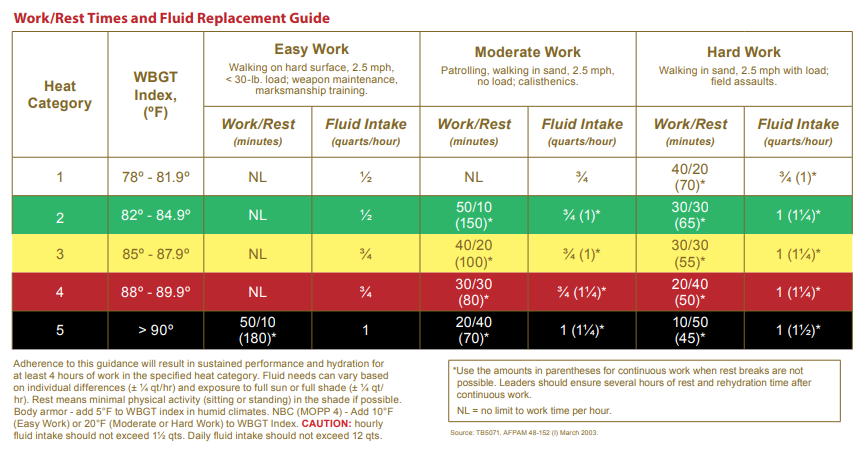
https://www.cdc.gov/niosh/heat-stress/about/illnesses.html. All heat-related symptoms and help. Hydrate.
HAVE A PLAN. If your AC goes out, find a cooling center or neighbor / relative.
MARYLAND TOP 5 RISKS
Central Maryland is susceptible to a mix of natural and human-caused hazards due to its geography, population density, and infrastructure. This plan prioritizes the top five threats based on frequency, severity, and impact potential:
Severe Weather (Thunderstorms, Hurricanes, Tornadoes)
- Public education campaigns on emergency kits and safe sheltering.
- Install and maintain NOAA weather radios in schools and public buildings.
- Develop evacuation routes and designate emergency shelters.
Flooding (Flash Floods & River Flooding)
- Pre-identify flood-prone zones and distribute flood maps.
- Promote flood insurance in vulnerable communities.
- Train first responders in swift water rescue.
Winter Storms
- Stockpile road salt, fuel, and emergency heating supplies.
- Develop continuity plans for essential services.
- Coordinate with hospitals for emergency access during snow events.
Cyberattacks (Critical Infrastructure Disruption)
- Cyber Training for Public – phishing awareness and security protocols.
- Backup all critical data off-site.
Hazardous Materials Incidents
MAKE A PLAN
How will I receive emergency alerts and warnings?
What is my shelter plan?
What is my evacuation route?
What is my family/household communication plan?
Do I need to update my emergency preparedness kit?
3 to 5 Day Kit
Maryland State Emergency Preparedness and Response
WEATHER – Emergency Management – Graphical Dashboards
Nuclear
Top 10 Items to Know for Radiation Emergencies
Radiation Emergency Medical Management (US GOV)
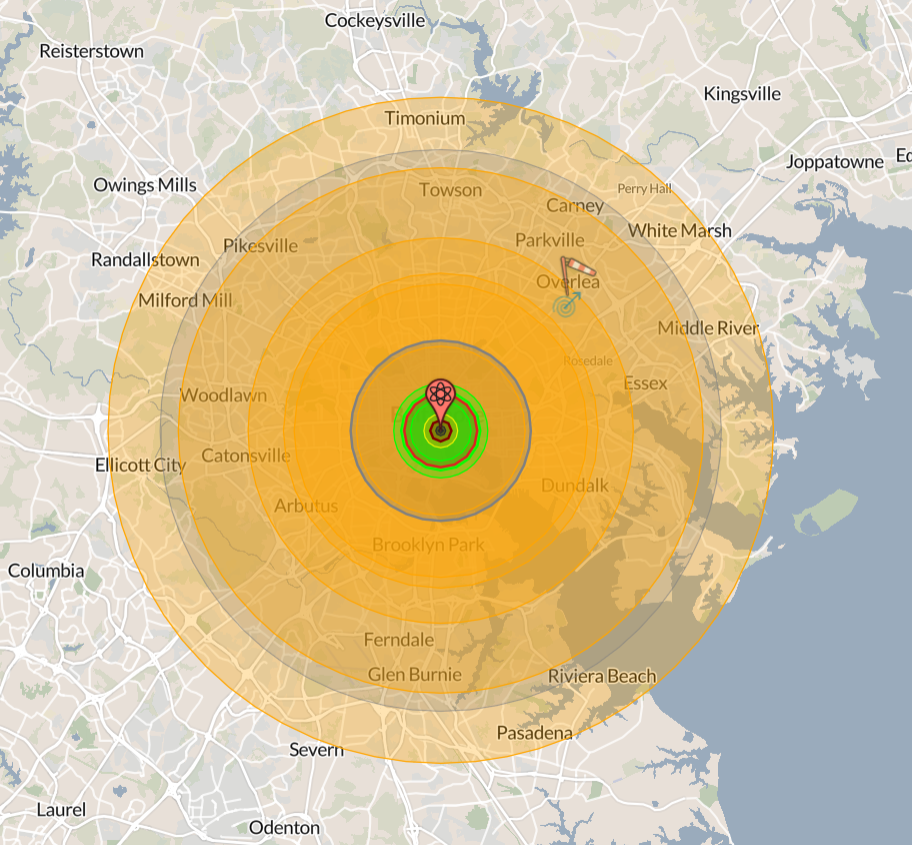
Nuclear Simulation of the effect: 350 Kilotons. Only a Simulation.!!