Nothing is perfect. Go with what works.
Always perform the ARRL RF EXPOSURE Calculation. Use each band and the maximum power you plan to use. 100 Watts and under. Your responsibility.
Requirements:
Little space 8 x 8 feet
Minimum of Bands 10-20, would like 30 and 40 M
SWR under 3:1 for the Rig auto tuner to tune. No external tuner needed
Ground by counterpoise
FULL INSTRUCTIONS
To fit a 36-foot end-fed wire antenna into a compact 8ft x 8ft footprint (like a balcony, wall, or wooden frame), the most effective routing method is a “Snake” or Zig-Zag pattern.
This 36-foot length is a “magic number” for random wire antennas because it is non-resonant on all amateur bands from 10 to 40 meters, which prevents extreme impedance issues that can damage your equipment.
Recommended Wiring Route (36 Feet)
To maximize performance and minimize signal cancellation (which happens if wires are too close to each other), aim for at least 1.5 to 2 feet of spacing between horizontal or vertical runs.
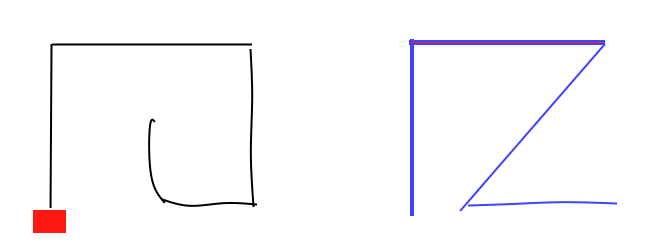
| Segment | Direction | Length | Running Total |
| Start | Feedpoint (Bottom Left) | – | 0 ft |
| 1 | Vertical Up | 8 ft | 8 ft |
| 2 | Horizontal Right | 8 ft | 16 ft |
| 3 | Vertical Down | 8 ft | 24 ft |
| 4 | Horizontal Left | 4 ft | 28 ft |
| 5 | Vertical Up | 8 ft | 36 ft |
Installation & Wiring Diagram
In this configuration, your wire forms a “U” shape with an extra vertical leg in the middle.
- Feedpoint: Place your 9:1 Unun at the bottom-left corner.
- Insulators: Use plastic standoffs or PVC pipe at each corner to keep the wire away from any metal (railings, siding, or gutters). Metal nearby will significantly de-tune the antenna.
- Spacing: By ending segment 4 halfway (4 ft) across the frame before going up for segment 5, you maintain a healthy gap between the radiating elements.
Critical Setup Tips
- The Unun: You must use a 9:1 Unun (Impedance Transformer) for a 36-foot “random wire.” A standard 49:1 or 64:1 EFHW transformer will not work well with this specific length.
- Counterpoise: Random wire antennas require a “missing half.” Attach a 17-foot counterpoise wire to the ground/shield side of your Unun. You can let this wire hang straight down or run it along the floor/baseboard.
- Antenna Tuner: Even with a 9:1 Unun, you will need a wide-range antenna tuner (internal or external) to achieve a low SWR on all bands. Internal Tuners can handle 3:1 150 Ohms. An external tuner can handle 15:1 1,500 Ohms.
- Environment: If you are mounting this against a wall or balcony, try to keep the wire at least 2-4 inches away from the surface using non-conductive standoffs.
Key: Length of End Fed. Wavelength https://udel.edu/~mm/ham/randomWire
UN UN (9:1 , RF Common Choke 1:1 )
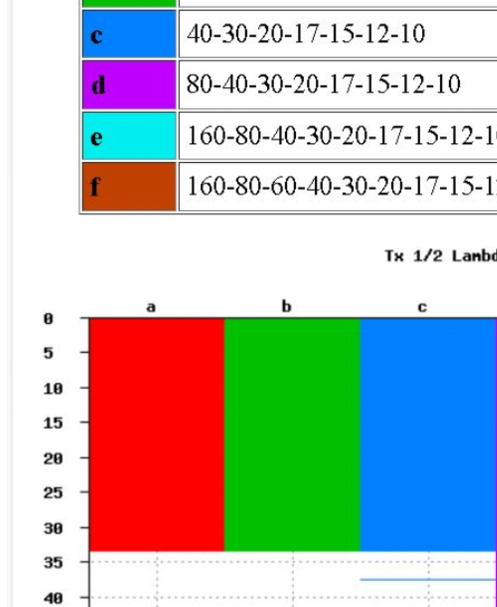
Recommended Wiring Route (36 Feet) tune to 35.5 via nano
To maximize performance and minimize signal cancellation (which happens if wires are too close to each other), aim for at least 1.5 to 2 feet of spacing between horizontal or vertical runs.
Installation & Wiring Diagram
In this configuration, your wire forms a “U” shape with an extra vertical leg in the middle.
- Feedpoint: Place your 9:1 Unun at the bottom-left corner. Before the shack, add a 1 to 1 RF Choke, or make one.
- Insulators: Use plastic standoffs or PVC pipe at each corner to keep the wire away from any metal (railings, siding, or gutters). Metal nearby will significantly de-tune the antenna.
- Spacing: By ending segment 4 halfway (4 ft) across the frame before going up for segment 5, you maintain a healthy gap between the radiating elements.
- The Unun: You must use a 9:1 Unun (Impedance Transformer) for a 36-foot “random wire.” A standard 49:1 or 64:1 EFHW transformer will not work well with this specific length.
- Counterpoise: Random wire antennas require a “missing half.” Attach a 17-foot counterpoise wire to the ground/shield side of your Unun. You can let this wire hang straight down or run it along the floor/baseboard.
THE TEST INDOORS:
End fed box 8 x 8 Balcony prototype 9:1 un un 18 AWG stranded. No choke 2 ft coax after 9:1 36 feet.
INDOOR TEST 36 feet 9:1 Un UN to 2 ft Coax to NanoVNA
VSWR Sweep 7.0 MHz to 30.0 MHz

Frequency Smith Chart
